Isis

Isis
Goddess of..
Cosmic Order, Fertility, Healing, Magic, Moon, Motherhood, Protection of Children, Resurrection, WisdomName Variants
Aset
Cognate Goddesses
Demeter, Aphrodite, Artemis - even aspects of the Virgin Mary in popular devotion
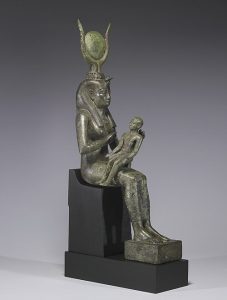
Isis with Horus the Child
Consorts and Offspring
Sister-wife of Osiris and mother of Horus
Favourites and Familiars
Hawk/falcon (with Horus), cow, lion (protective), snake, scorpion (in protective scorpion-goddess forms
Summary
Isis (Egyptian: Aset) is one of the most powerful, beloved, and enduring goddesses of the ancient world. She is the quintessential divine mother, magician, healer, and protector. As sister-wife of Osiris and mother of Horus, her myth centres on love, loss, resurrection, and the triumph of life over death.
Longer Introduction
After Seth murdered and dismembered Osiris, Isis (with Nephthys) searched the land, reassembled his body, and through powerful magic conceived Horus. She hid and protected the infant Horus from Seth in the marshes, famously surviving scorpion stings and other perils. Her spells and laments are among the most beautiful and powerful in Egyptian literature. In later periods (especially Ptolemaic and Roman), Isis became a universal goddess — "Queen of Heaven," syncretized with many other deities (Demeter, Aphrodite, Artemis, even aspects of the Virgin Mary in popular devotion). Her cult spread across the Mediterranean and beyond.
Bibliography and Links
https://en.wikipedia.org/wiki/Isis https://www.britannica.com/topic/Isis-Egyptian-goddess https://egyptianmuseum.org/deities-isis https://www.meredithrom.com/blog-articles/2025/1/17/who-was-the-egyptian-goddess-isis
General Region
Mediterranean
Region & Culture
Worshipped from the Old Kingdom through the Roman period. Major centers: Philae (her most famous late temple, now relocated due to Aswan Dam), Behbeit el-Hagar, and temples shared with Osiris and Horus across Egypt. In the Greco-Roman world, Isis temples existed in Rome, Pompeii, Athens, and even Britain. Her mysteries promised initiates protection, healing, and happy afterlife.
Pantheon
Ancient Egyptian
Symbols, Attributes & Iconography
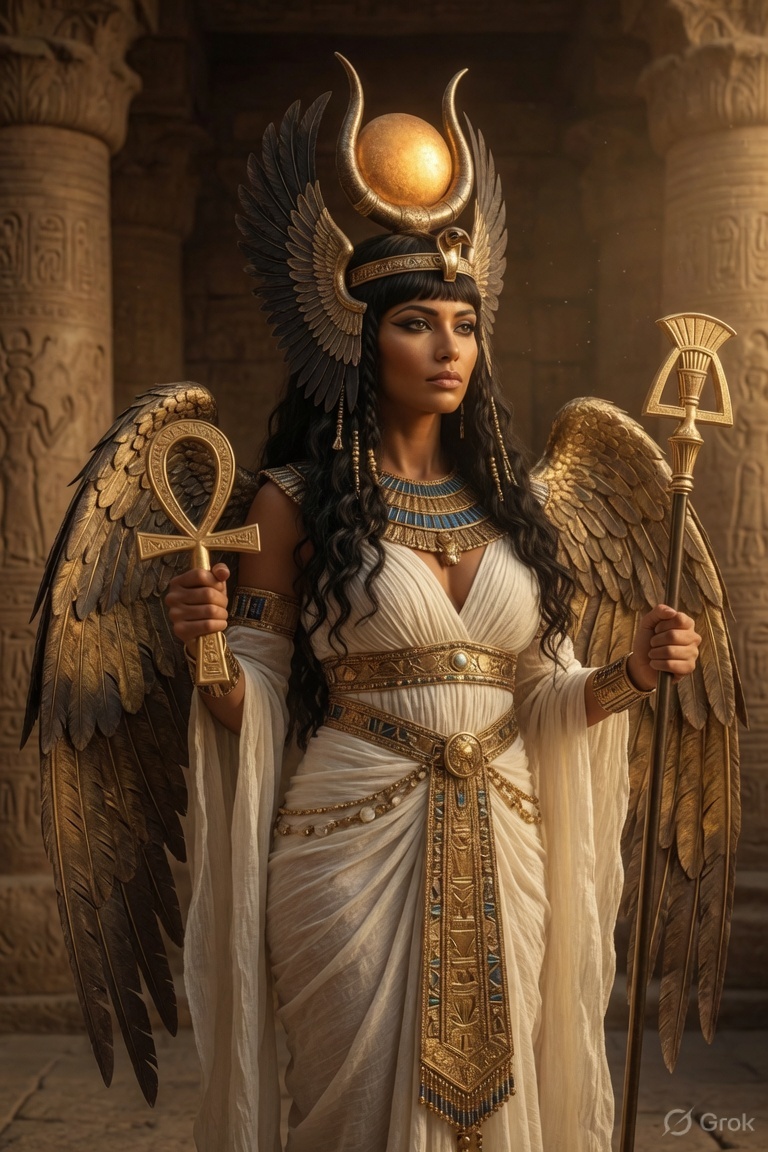
Wings: Protective, outstretched wings (often shown sheltering pharaohs or Horus) Headdress: Throne hieroglyph, or cow horns enclosing a sun disk (syncretism with Hathor). Ankh & Was Scepter: Life and power. Tyet (Isis Knot); Similar to ankh, symbol of protection and life. Sistrum: Rattle instrument associated with her joyful, life-affirming aspect. Colours: White (purity), gold (divinity), deep blue or Nile green.
Era of Worship
Worshipped from the Egyptian Old Kingdom through into the Roman period.
Cult Sites
Major centres of worship: Philae (her most famous late temple, now relocated due to Aswan Dam), Behbeit el-Hagar, and temples shared with Osiris and Horus across Egypt. In the Greco-Roman world, Isis temples existed in Rome, Pompeii, Athens, and even Britain.

Philae as seen from Bigeh Island, painted by David Roberts in 1838 - scan by User:Manfred Heyde
AI Prompt Template
Mystical powerful portrait of Isis, Egyptian goddess of magic and motherhood, beautiful woman with long black hair and vulture headdress or cow horns with sun disk, wearing white and gold pleated dress, holding ankh and scepter, wings spread protectively, ancient Egyptian temple background, golden warm lighting, divine mother aura, hyper-detailed, 8k --ar 3:4 --stylize 200